

Bryan Johnson Must Die

Breaking Convention is back for a one day summit in London on May 16th, ahead of our three day conference in 2027. In-person and live-stream tickets are both available here, get them while they’re hot!
If you can dodge the shrapnel of post-truth bombs, navigate the Strait of Hormuz and sink your hands into the void that used to hold our certainties, there’s something waiting for you. Two things, in fact, both wonderfully firm and certain in an age of confusion.
Death and taxes. They’ll always be with us, no matter how crazy things get.
Or will they? Silicon Valley billionaires are working feverishly to render both obsolete. This is central to the philosophy of Accelerationism that many tech billionaires aspire to. Accelerationists want to radically accelerate capitalism and technology to bring about the collapse of the existing order. After that, we will live in a magical era of ‘post-scarcity’ ruled by benevolent CEOs and Artificial Intelligence. This will, coincidentally, make tech founders even more powerful than they are now, but sacrifices must be made for the greater good.
One of the movement’s key figures is PayPal co-founder Peter Thiel, who stated in one of his lectures on the Antichrist that the coming of the Beast is evident partly because “it’s become quite difficult to hide one’s money.” This horrific situation hasn’t stopped the ten richest U.S. billionaires from increasing their wealth by $698 billion in 2025, according to an Oxfam study.
Thiel represents the epitome of a worldview that sees the Earth and all its inhabitants as units to be measured, manipulated and ultimately transcended. Not just taxes, but death, are program flaws to overcome on the journey toward a promised land in which the world is run by a select few trillionaires. As the tech lords who made their money in the early internet era get further into middle age, this ideology is seeping into a particular form: longevity obsession.
Longevity is nothing new in Silicon Valley, and is core to another one of its favourite philosophies: Transhumanism. This is the idea that our technology will reach a singularity in which we transcend our feeble bodies and live forever, or for far longer, as we combine our minds and bodies with our machines.
OpenAI co-founder Sam Altman is a proponent of this ‘Merge’ as he calls it. Ray Kurzweil, perhaps the most famous transhumanist philosopher, is fixated on the notion that he can avoid death entirely and speak to his dead father once the Singularity finally comes.
Peter Thiel has invested in both anti-ageing and Transhumanist companies, including an expressed interest in parabiosis: blood transfusions from the young to the old. Now, the tech lords may have found the next trend in their longevity quests: psychedelics.
Ageless Molecules
This connection has been growing for some time. In fact, in the early days of Rebel Wisdom in 2018, we went to Thiel Capital to interview Eric Weinstein, who was managing director at the time. As it turned out, Michael Pollan was also there giving a talk on psychedelics to some fairly bored-looking venture capitalists.
Thiel was there too, and while we never spoke, in my memory he was definitely eyeing my youthful blood as his shadow moved independently from his body.

This was a couple of years before the psychedelic gold rush of the early 2020s, when billions would flow into psychedelic research and set off the era of psychedelic capitalism. At the time, I made a series of films critiquing this development and had a public debate with one of the founders of Compass Pathways, the leading psychedelic pharma company at the time.
Then, as now, I view the meeting of psychedelic experiences with capitalism as both dangerous and misguided. As I wrote about in my book The Bigger Picture: How psychedelics can help us make sense of the world, the reason psychedelic capitalism is so pernicious isn’t just because our existing models of medicine, finance and society can’t hold the complexity and promise of the psychedelic experience. It’s also because those systems capture any real threats, denature them and then sell them back to us.
This has, as many of us predicted, happened with psychedelics in the last decade. Filtered through the philosophy of Transhumanism and longevity culture, they lose their power as counter-cultural agents and become tools of optimisation, delusion and emptiness. To understand the implications of this, and what the capture of the psychedelic experience tells us about society more broadly, we need to look no further than the quixotic psychedelic quest of Bryan Johnson.
The Life of Bryan
Bryan Johnson is really, really into longevity. He made a reported $300 million from the sale of Braintree to PayPal, and after going through a divorce and leaving the Mormon church, he became obsessed with staying young and fit.
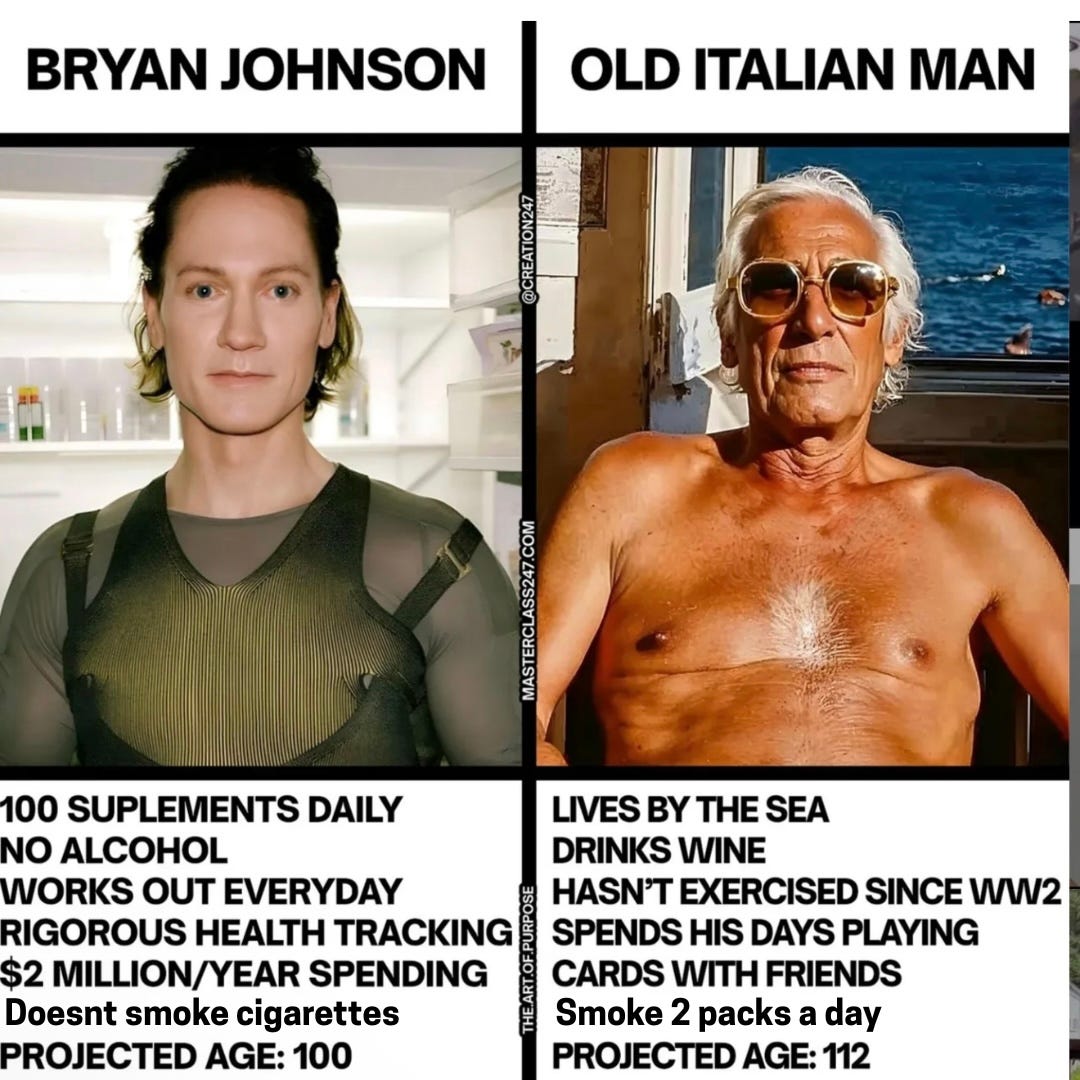
In late 2025, 48 year-old Johnson made waves and courted criticism by live- streaming a high-dose psilocybin journey, which was inspired in part by mice studies suggesting psilocybin might increase longevity. In early 2026, he topped this by live-streaming a high-dose 5-MEO DMT experience. This, too, was part of his quest to stay biologically young for as long as possible.
In a recent appearance on the All-In podcast, recorded just a few days after his 5-MEO experience, Johnson repeatedly tells the host that psychedelic experiences are safe and effective when they’re ‘quantified’.
This is telling, because Johnson’s highly monitored and widely broadcast trips point to a philosophy and worldview much larger than his obsession with youth. A worldview rooted in Silicon Valley philosophies that are inimical to genuine transformation.
Psychedelic Qualia
Psychedelics transform us through felt experience. They help us feel what we couldn’t feel, see what we were blind to in ourselves. They take us to the darkest parts within us and unfurl them into something beautiful. The reason venture capitalists, Transhumanists and longevity obsessives are terrible stewards of these experiences is that they, and the system they represent, see the world primarily through the lens of quantity. What can be measured (like profits and brain data) is seen to be more real than quality. Quality is your lived experience. Your joy. Your sadness. Your life.
As I argued in Reality Eats Culture for Breakfast, I see this worldview as the main generator of the crises we’re living through today.
Johnson is the human embodiment of the pathology of a quantity-first mindset. He spends a reported $2m a year on longevity, and gleefully tells the host of the All-In podcast that before his psilocybin journey his blood glucose “was in the top 99.5 percentile of all the population. After, it went to the top 99.9.9 percentile.”
He also tells the host that a 5-MEO experience is “5 to 10 times” more powerful than a N,N-DMT experience, an insane statement that tries to quantify an unquantifiable qualitative experience. Having been administered 5-MEO DMT and been continuously infused with N,N-DMT under laboratory conditions, I can attest that Johnson isn’t so much wrong as he is deeply confused. His understanding of neuroscience is also riddled with errors, full of misleading and oversimplified concepts, for example, that psychedelics ‘reset’ the brain.
This is no surprise, because Johnson sees his own life, and reality, as something that is only real once it’s measured. Everything he experiences becomes most real when it’s turned into a quantity. And it is by looking at Johnson’s quantified, measured psychedelic experiences that we can see how empty and flaccid this worldview is, how much of modern society it dictates, and how to overcome it.
The first step, and the most important, is to remind ourselves that Bryan Johnson must die.
Why Must Bryan Johnson Die?
When I started researching Johnson, I thought his longevity obsession came from a death anxiety. However, he has stated that it doesn’t, and my sense from listening to and watching him is that he is more afraid to grow old than he is to die. He seems to have a desperate craving to be young. Or perhaps he suffers from gerontophobia, an intense fear or aversion to growing old.
In his All-In appearance, he frames his 5-MEO DMT trip, and psychedelics in general, as a reset that brings us back to a neurological and psychological state closer to childhood. Talking about his integration process so far, he tells the host, “You are restored to this childlike state. And, I mean, the past couple days, I have felt childlike.” Whether it’s laughing in a dream, or navigating an argument with his partner, Johnson interprets his responses as evidence he has become neurologically younger and purer.
This is by no means a universal response to a psychedelic experience. So why is it Johnson’s response? This can be explained with a theory from Integral Studies: people always interpret an altered state through their own stage of development and preconceptions.
Why is Johnson so desperate, consciously or not, to interpret his experience through the lens of youth? Why does he spend $2m a year to stay young, or measure his son’s nightly erections to compare them to the strength of his own? Only the depths of Bryan Johnson’s psyche can tell us that, and even high doses of psilocybin and 5-MEO DMT haven’t cracked the defences around those depths.
Regardless of Johnson’s personal psychology, there is a symbolic marker in his obsession with a state of child-like innocence. It is a form of arrested-development that is endemic to Silicon Valley, and which has made its way into our technology. It’s in our friendly AIs who tell us what we want to hear. It’s in the sanitised campuses of Palo Alto. It’s in the trigger warnings and coddling of our universities.
In her book Alone Together, the sociologist Sherry Turkle, who has spent a career researching the tech industry, refers to a deep desire among many within it to live ‘a friction-free’ emotional life. For many introverted people in the tech industry, the ultimate horror is to engage in true human intimacy. So instead of meeting that horror and developing, they have created technologies that help us avoid human contact, which in turn work well for a techno-feudal economic system that would much prefer people didn’t have to be paid to do what machines can do.
But there’s a problem. Life is friction. And the ultimate friction, that thing that presses against every waking moment, that thing without which we cannot feel truly alive and present, is ageing. Every moment, you are growing older, weaker and closer to death.
There is nothing pathological about caring about longevity; it makes sense to stay fit and healthy, and most of us want to stay looking young and fit. However, Johnson’s obsession is extreme and his use of psychedelics, which he views primarily as longevity tools to aid him on his quest, is likely to backfire on him.
Immeasurable Catharsis
I’ve been part of the psychedelic world for my whole adult life. I’ve authored a popular book on psychedelics, and as a Co-Executive Director of Breaking Convention, Europe’s largest conference on psychedelic science and culture, I read hundreds of abstracts every year about the latest research happening around the world. I’ve also run retreats and guided many people through psychedelic journeys.
Watching Johnson’s circus unfold, I’ve been thinking about two lesser-known aspects of psychedelic experience that he seems unaware of. Or, that he’s gazing at with a child-like innocence.
The first is that for all its profound power, psychedelic experiences are not stronger than the human will. I have had participants on a high dose of mushrooms come up to me with huge pupils and explain very lucidly that they aren’t feeling anything. This also happens fairly regularly in clinical trials on psychedelic-assisted therapy for depression, and it happens recreationally. Our ability to block out what we don’t want to look at is truly astonishing, which is why therapy or ritual around the psychedelic experience is key.
By all accounts, Johnson really did let go into his experience and navigate it quite well. As he describes in the podcast:
“You get in this world and… you either panic because you feel like the gates of hell are going to open, that the stream of existence is going to just tear you to shreds…like break your brain… You feel like it’s going to threaten your sanity …And so in that moment, you have to say, do I try to wrestle this? … just like wait it out until it’s over? Or you just relent. You say yes. And you have to, in that moment, you have to say yes so thoroughly. You have to release all attachment, all preconditions, all want, all desire. You have to release self, ego, control. You just have to just relent entirely. And then when you do that, it opened up this unimaginable bliss and euphoria.”
My first high-dose 5-MEO experience was similar to this and I responded in much the same way. However, what’s striking about Johnson’s experience is that with all the deep letting go he was able to open into during the peak state, his fixation on longevity is even more intense in the aftermath. He let go of control, but not of his longevity quest.
This might be because Johnson created a set (his mindset and intentions) and setting (where he was and how he approached the experience) that exactly mirrored his obsession. He took such a high dose that it was almost certain to be a peak mystical experience that annihilated any sense of introspection.
Everything was monitored. Everything was controlled. Everything was centred around longevity. Johnson’s obsession is so deeply rooted, so all encompassing that his integration is all about returning to a child-like state.
What are the qualities of a child-like state? It is innocent. Light and joyful. And that’s a big problem for Bryan Johnson.
Something else I’ve learned in my psychedelic journey and career is that true, lasting transformation and freedom almost always involves going into those dark places we don’t want to look at. Writhing with agony, pain, shame, aloneness.
Johnson does seem willing to go to these places, at least from his own descriptions. He described his psilocybin trip as challenging and a ‘force to be respected.’ He also acknowledged to one commenter that his obsession with longevity might have gotten out of hand. He also explained that, despite what people assumed, he wasn’t afraid of death and had looked at his mortality deeply during his experiences with depression. He even seemed to question his quantification obsession, stating that “You can spend all your time optimising your biology, but if you don’t understand what life and death mean to you, the numbers don’t matter.”
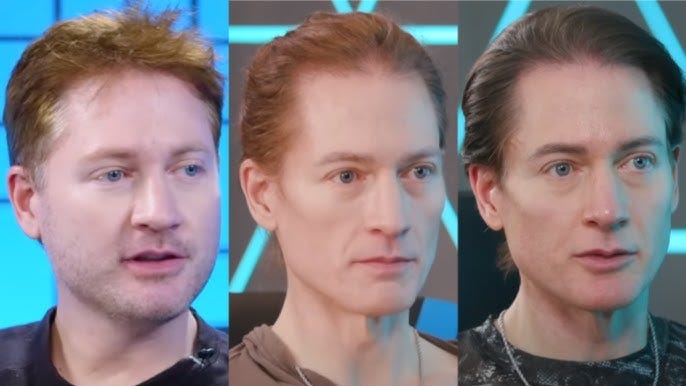
But how deep did this realisation go, and did he integrate it? It seems unlikely, because just a few months later, Johnson did the same thing again with 5-MEO DMT, which seems to have deepened and strengthened his obsession with measurement, quantification and longevity.
My theory is that, for Johnson, measurement is a safety mechanism that won’t easily be relinquished. It is a defence against the aloneness and vulnerability that comes when we are not witnessed, not measured, not categorised.
That vulnerability is also freedom. Human aliveness, unmediated by anything other than this present moment. This remembrance is exactly what we need to return to collectively. To a world of human contact that is not mediated through data. Where we wrestle with ideas without the safe holding of our AI agents. Where we’re messy and contradictory and incomplete.
As the Sufis teach, it is only by going deeply into our incompleteness and finding within it the profound desire to connect to the divine that we find true freedom. This is the real fountain of youth; the deep longing that lies in our broken hearts and which inspires us into the most astonishing aliveness.
A New Protocol
My hope for Johnson would be that he could return to, and integrate, some of the insights he shared from his psilocybin journey. If I were going to make a protocol for his next trip, it would look something like this.
He would spend several weeks inquiring into his relationship to ageing and youth. Journaling, speaking with friends, or doing therapy around it. What is it like not to know when he might die, or how he might age? What does he notice in his body with that possibility? What if he were to die, and nobody knew or cared?
He would create a simple, humble setting for himself with no tech whatsoever. No cameras, no devices, no measurement. He would have psychological support nearby if he needs it, but this journey is one he must take alone. On the walls of this humble room, he would surround himself with AI photos of an older Bryan Johnson wrinkled and infirm at 90 years of age. Mormon iconography to remind him of where he came from. A gentle, droning playlist.
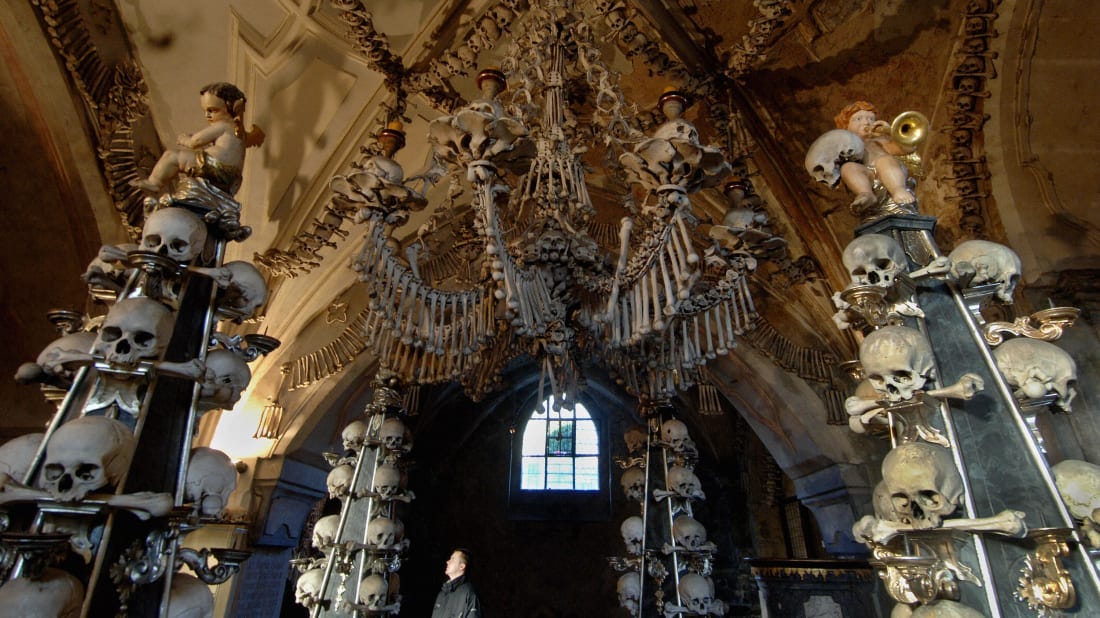
How is the room lit? Only by candles, their soft light flickering against the skulls he’s placed on shelves on the walls, their empty eyes reminding him of where he will end his days. Before dosing, he would summon the gods of death and decay. If he felt ready, he might choose to bow before them. He would take a medium dose. A dose that doesn’t annihilate his agency, but allows him to deeply inquire into his longevity quest.
What happens then? I’m not sure.
I imagine Bryan Johnson writhing on the ground, twisting and twisting and twisting. I hear the oh-so quiet voice of the little boy inside him asking for what he never received from his divorced parents. I feel him fearlessly grip his shame and hurt, and the long, slow sigh seeping through his teeth as he realises that he cannot stay young, and that what truly matters in life cannot be measured or optimised.
I imagine him realising that the vague bypassing of ‘it’s all love’ or ‘we’re all connected’ is all very nice, but only the first step of many into spiritual awakeness. I hear him mutter “it’s all pain… I’m all alone,” as he touches the inky darkness of true surrender and peace. That non-dual moment which contains all love and all pain, every agony and every ecstasy.
Or maybe not. But at some point, Johnson will have to face the realities of life, because he will grow old. He must die. So must you, and everyone you meet today and everyone you’ll meet tomorrow.
As the sage and former death and dying counsellor Stephen Jenkinson told me when I asked him what he learned holding space for thousands of dying people, he replied that people die in the manner of their living. All of us. If we live in acceptance of the mystery of ageing, we will die in that acceptance. If we live desperately trying to return to an imagined youth, we will die in that manner.
Dying Wise
Johnson is just one man on a quixotic quest. But I believe his capacity for a different kind of transformation, and the raw humanity it could be rooted in, is a metaphor for what we need to counter the commodification of human experience coming from the tech lords and their growing power.
Psychedelics can play a role in this transformation, but only when they are combined with the right practices and frameworks. They may well increase longevity, but they are not longevity products. They might also alleviate depression symptoms, but they are not depression medications.
They are molecules that interact with our biology to elicit experiences that can connect us to the very deepest parts of ourselves, and a mystery which renders the quantity-obsessed, adolescent blindness of Silicon Valley obsolete.
three things: death, taxes and. nurses. all sure things
Yes. As Jung experienced so brilliantly pointed out we need to face the discomfort within our psyche. The true spiritual process, psychological integration, individuation; call it what you will, is not a walk in the park. Nor is it a matter of meditating to a calm, quiet place, standing above and beyond the messiness of human existence. Rather, it is an absolute tearing apart of all one’s cherished ideas and fantasies of ascension and goodness. It is a descent into the depths of all one’s deepest darkest motives and desires; one’s rage, hatred, desire to grab and hold onto self-image, hard-luck stories, victimhood, need to be adored, fantasies of revenge, need to control others and even life itself. One feels exposed, utterly raw, wounded and vulnerable, full of anger, sorrow and fear. Staying in the heat of this exposure is the tapas, the difficult practice required to turn heat into light.